

Dryer Vent Cleaning
DRYER VENT CLEANING IN Vancouver, WA
Roughly 2,900 clothes dryer fires are reported in residential buildings each year, and failure to clean is the leading contributing factor at 34 percent of them. TTP Handymen provides dryer vent cleaning across Vancouver, WA, clearing the full duct run to the exterior, measuring the length against the 35 foot code limit, checking for the flexible plastic duct that should not be there, and confirming the outside damper still actually opens under airflow. Free estimates, and insured to $1 million throughout.
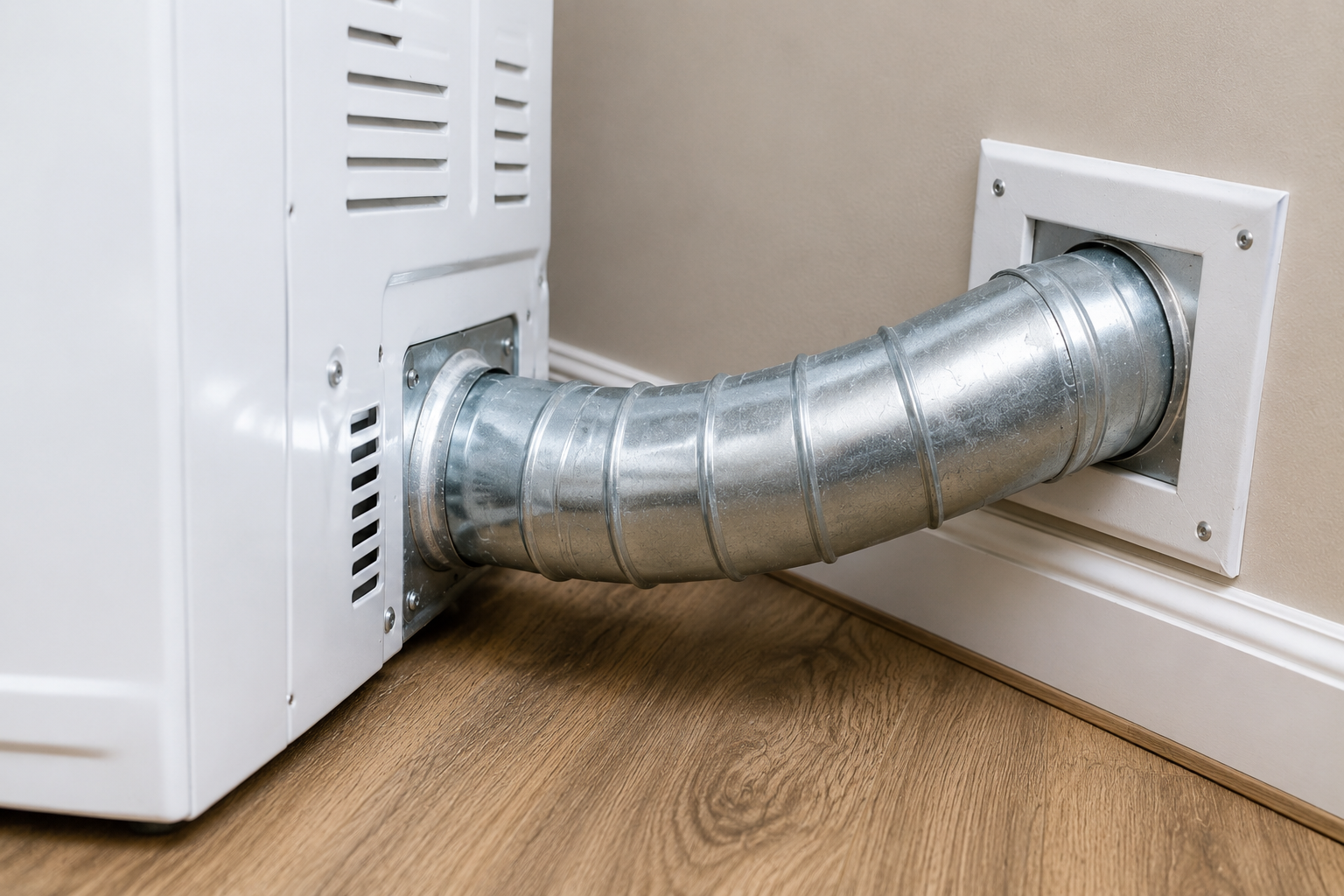
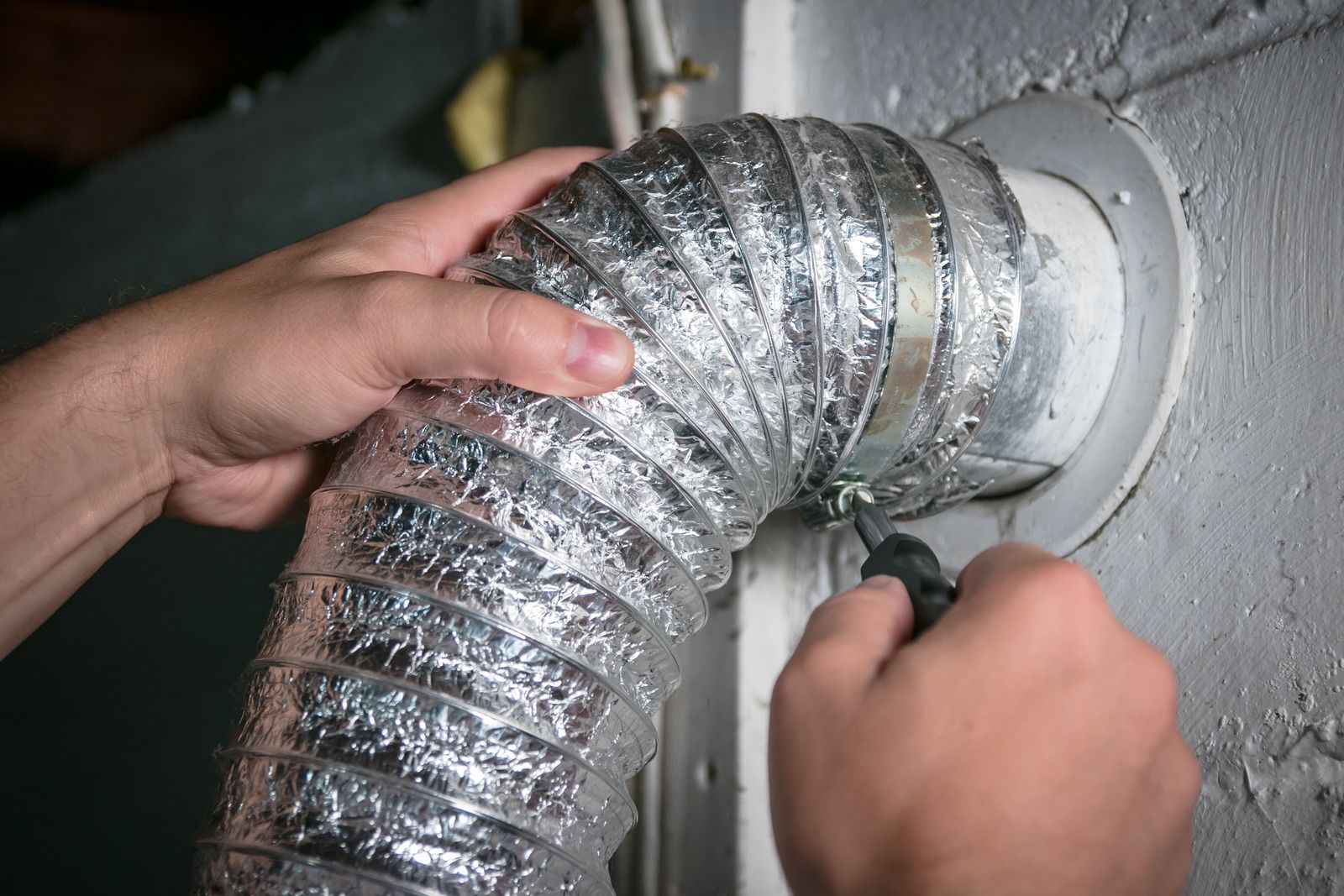
LINT IS NOT THE ONLY THING IN THAT DUCT.
Most people picture a fluffy gray layer. What actually accumulates is a compacted, oily film mixed with fabric softener residue, plus whatever has moved in at the outside termination. Bird nests behind a screened vent cap are common enough to be routine, and they are exactly why code says screens do not belong on a dryer termination.
We clear the entire run rather than just the first arm's length behind the machine, and we always open up the exterior hood to see where everything actually ends.
✓ Full duct run brushed and vacuumed to the exterior
✓ Duct length and elbow count checked against code
✓ Exterior damper tested for free movement
✓ Transition duct inspected for crushing and material
DRYER VENT CLEANING
A DRYER THAT TAKES TWO CYCLES IS TELLING YOU SOMETHING.
Restricted airflow is the symptom behind almost every complaint people call us about. Clothes still damp after a full cycle, a laundry room that gets hot and humid, a burning smell, a dryer that shuts itself down partway through. All of those trace back to exhaust that cannot leave the building fast enough, and the machine working harder and hotter to compensate is what eventually kills it.
LONG DUCT RUNS ARE COMMON IN NEWER LOCAL BUILDS.
Laundry rooms placed on interior walls or upper floors mean the exhaust often has to travel a long way with several turns to reach an outside wall. Code allows 35 feet total, but every 90 degree elbow counts as another 5 feet against that budget. Plenty of homes here are marginal on paper and genuinely restricted in practice once lint starts building.
LINT DOES NOT LIE ABOUT HOW LONG IT HAS BEEN THERE.
Pull a duct apart and the layers tell you the history. Compacted, discolored buildup with softener residue baked into it did not appear last month. In 4 years of doing this we have found bird nests, crushed flex duct behind cabinets, disconnected joints venting into crawl spaces, and screens over terminations that turned the vent cap into a lint trap. Every one of those was invisible from the laundry room.
WHAT A CLEAR VENT DELIVERS
DRAMATICALLY LOWER FIRE RISK
Lint is the leading item first ignited in dryer fires, and failure to clean is the leading cause. Removing it addresses the single biggest risk factor directly.
CLOTHES DRY IN ONE CYCLE
Restricted exhaust is why loads come out damp. Restoring proper airflow usually cuts drying times back to where they were when the machine was new.
LOWER ENERGY USE
A dryer running two cycles instead of one is doubling its energy draw. Clearing the restriction stops you paying for the same load twice, every load.
A LONGER LIVED APPLIANCE
Heat that cannot escape gets pushed back into the machine, cooking the thermostat, the heating element, and the bearings. Airflow is what keeps a dryer alive.
NO MORE HUMID LAUNDRY ROOM
Moisture that should be leaving the building ends up in the room instead, which shows up as condensation, musty smells, and eventually mildew on nearby surfaces.
PESTS KEPT OUTSIDE
A damper that opens and closes properly, with no screen for nesting material to catch on, keeps birds and rodents from treating the vent as a doorway.
WHAT WE VENT
OUR DRYER VENT WORK
What the job involves depends on how the duct was run and what has happened to it since. These are the tasks that come up on a typical dryer vent visit.
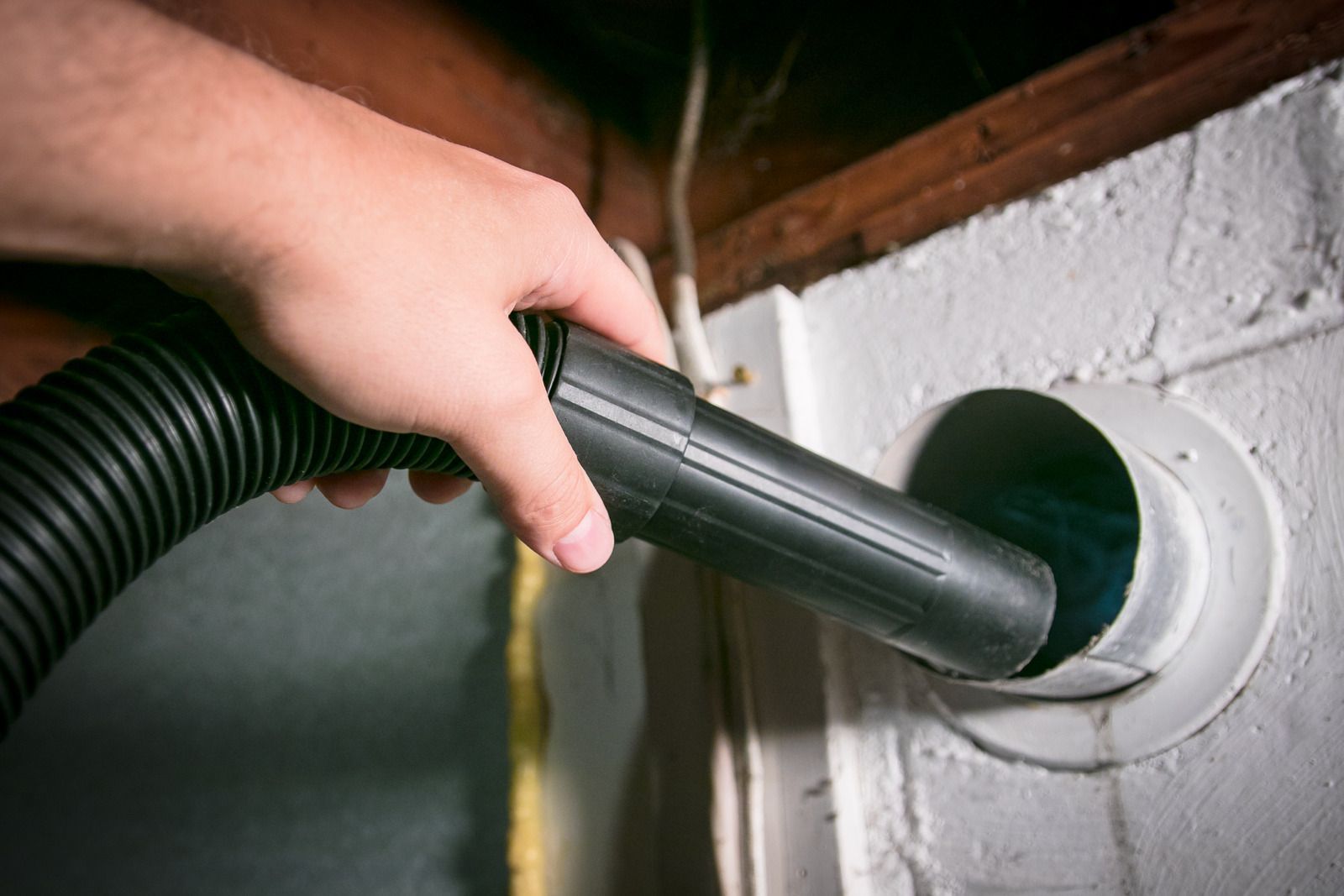
FULL RUN
Duct Interior Cleaning
Rotating brushes plus vacuum extraction clear the whole length rather than only the accessible first section. Lint gets pulled back out of the duct instead of being pushed further along it.
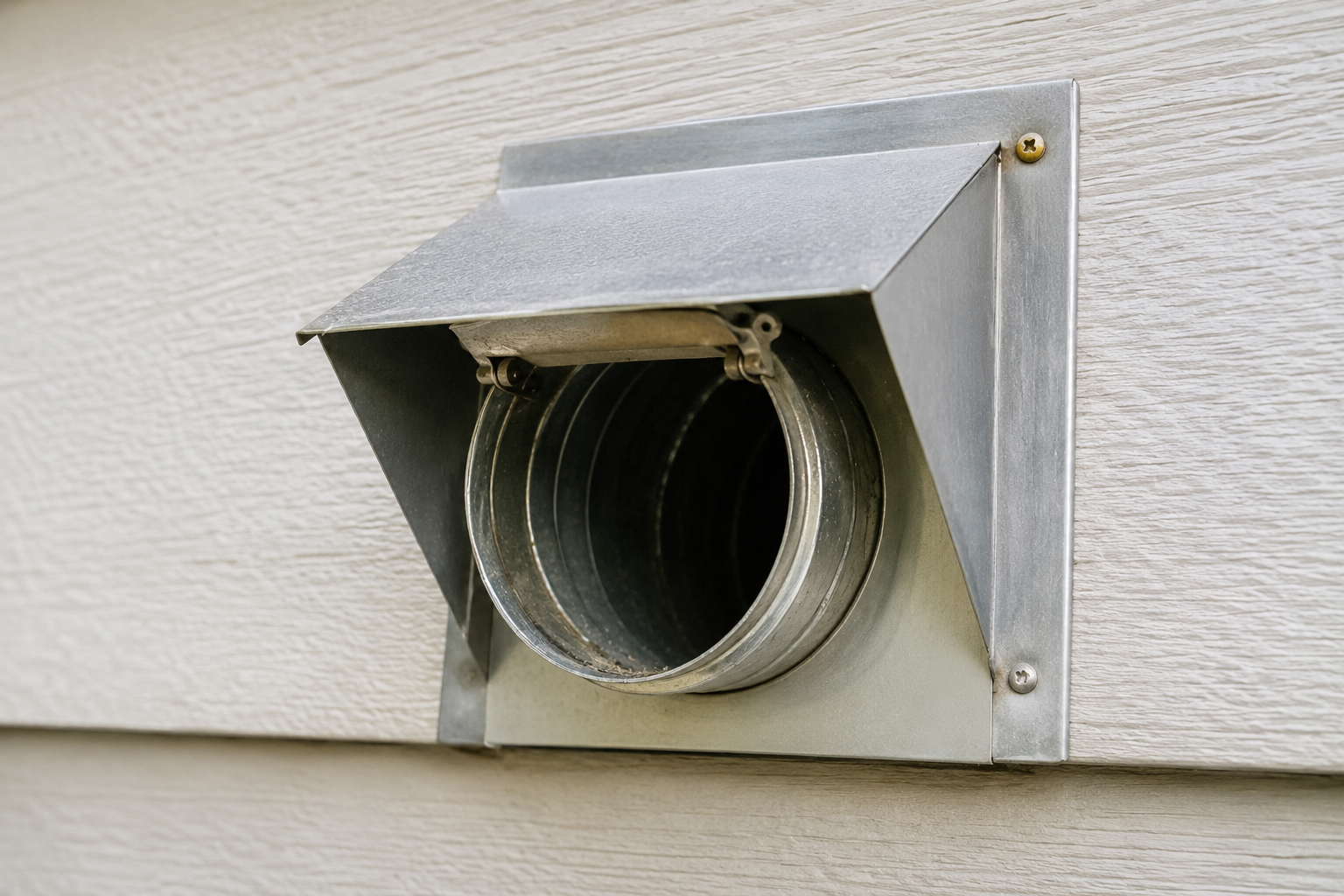
OUTSIDE
Termination and Damper Service
The exterior hood gets opened up, cleared, and tested by hand. Dampers stuck open let in cold air and pests, while dampers stuck shut send the entire exhaust load back into the house.
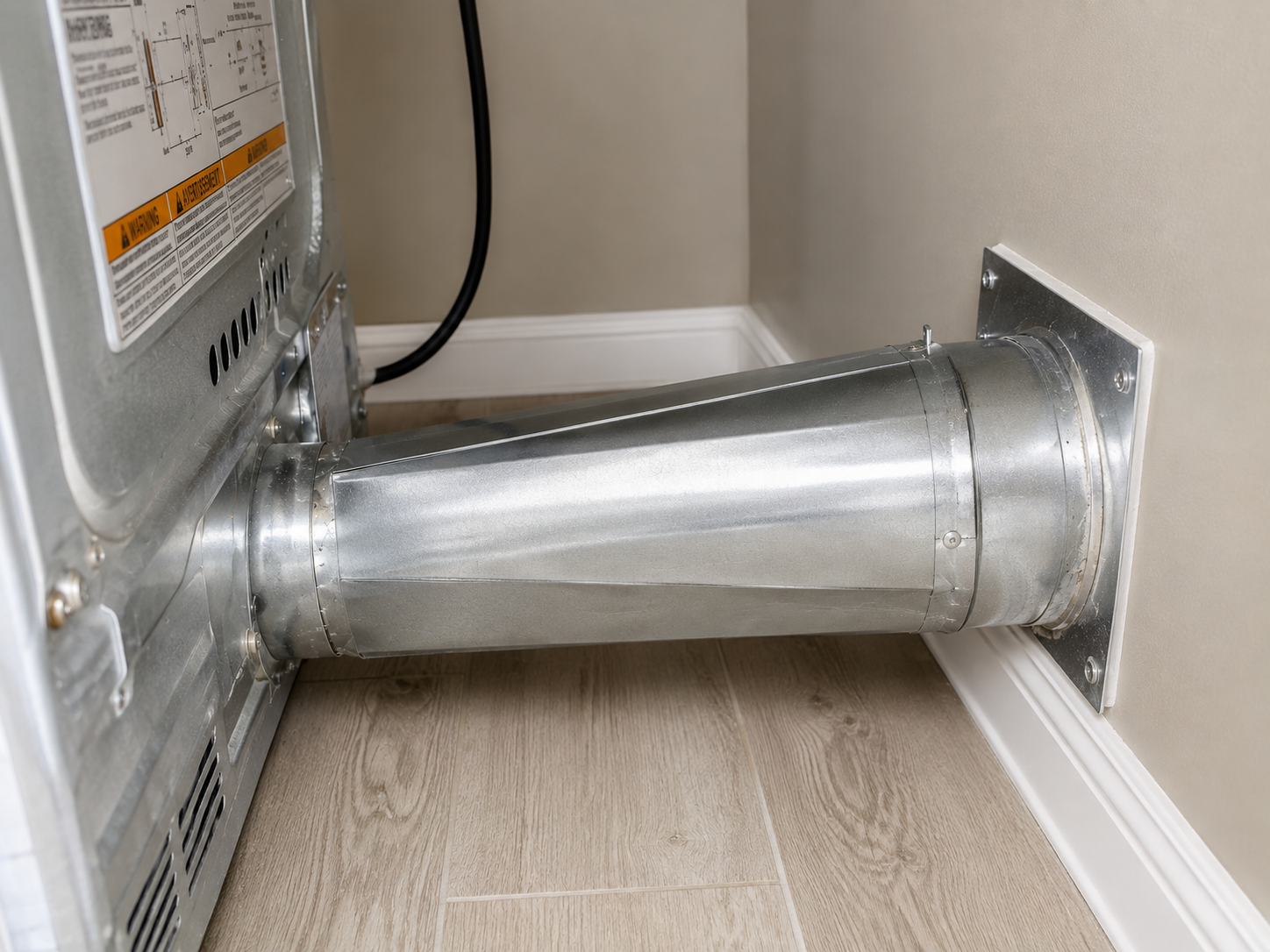
BEHIND THE MACHINE
Transition Duct Replacement
The flexible section between the dryer and the wall gets checked for crushing and for material. Plastic and thin foil products get replaced with listed metal transition duct cut to the correct length.
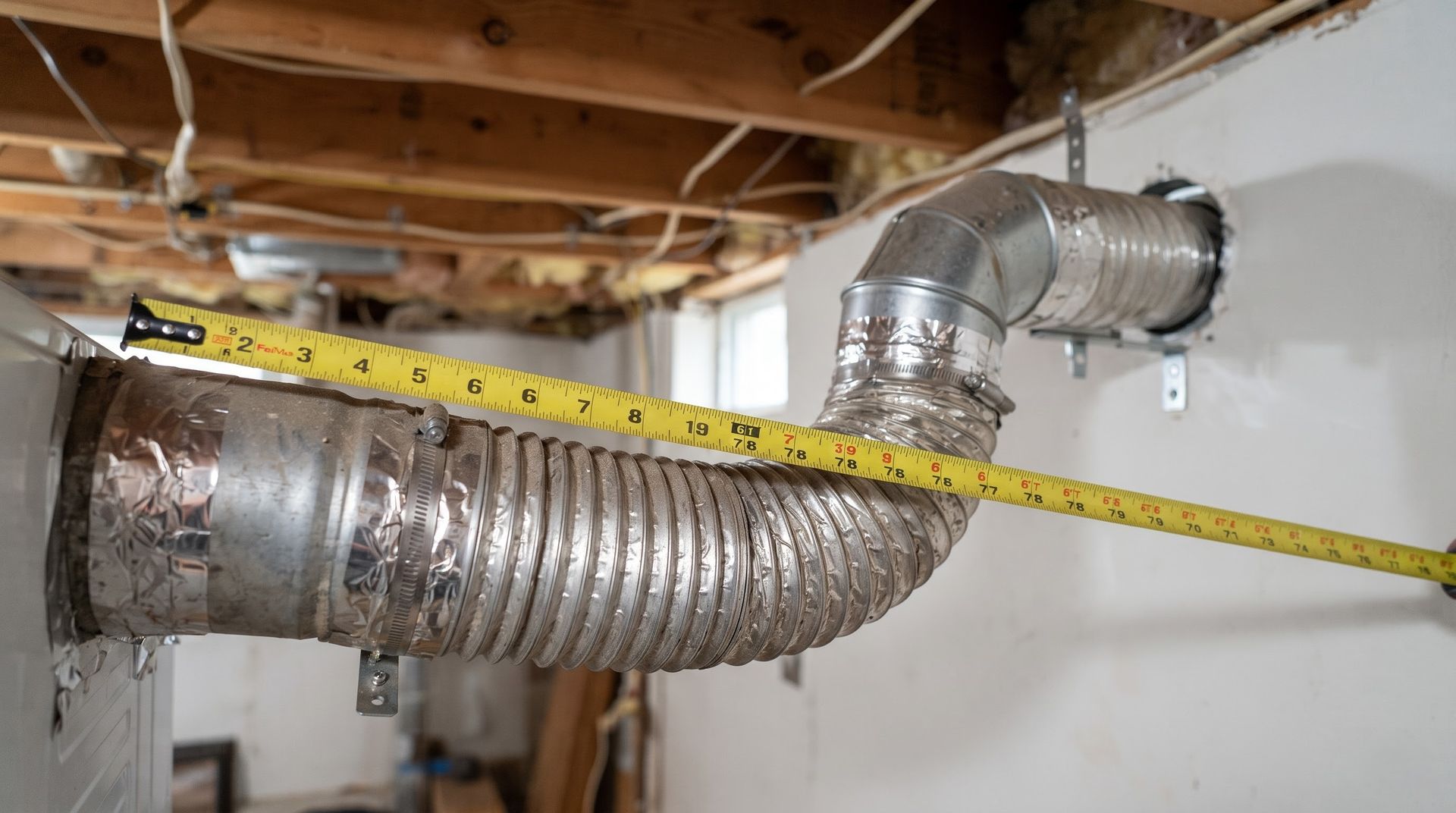
MEASUREMENT
Duct Run Assessment
We measure the actual duct run and count the elbows against the code allowance. Systems that come out over the limit get reported to you with options rather than simply cleaned and left alone.
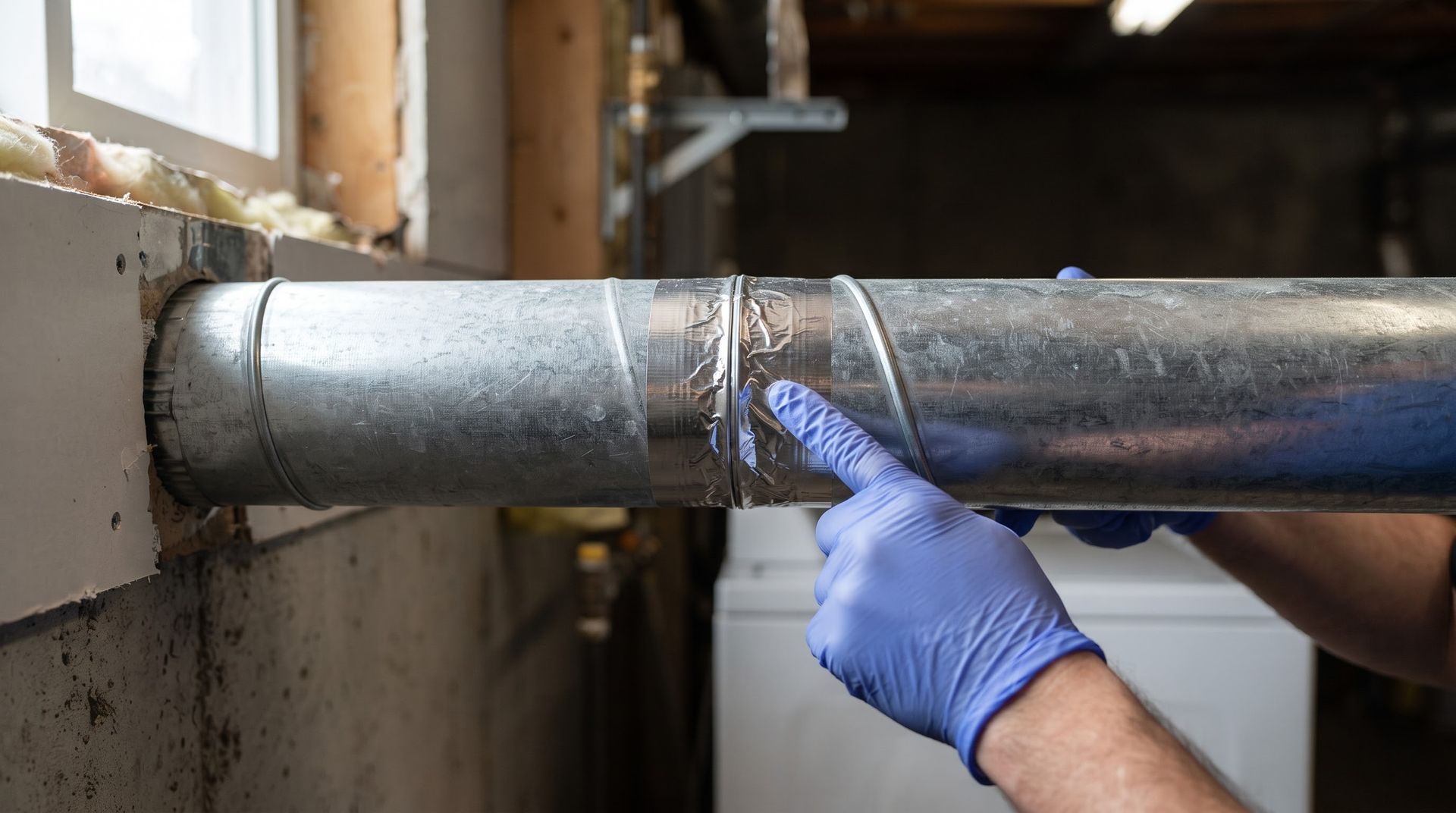
REPAIRS
Duct Repair and Resealing
Separated joints, crushed sections, and runs venting into crawl spaces or attics all get corrected. Joints get taped and secured rather than screwed together, since screw points catch lint immediately.
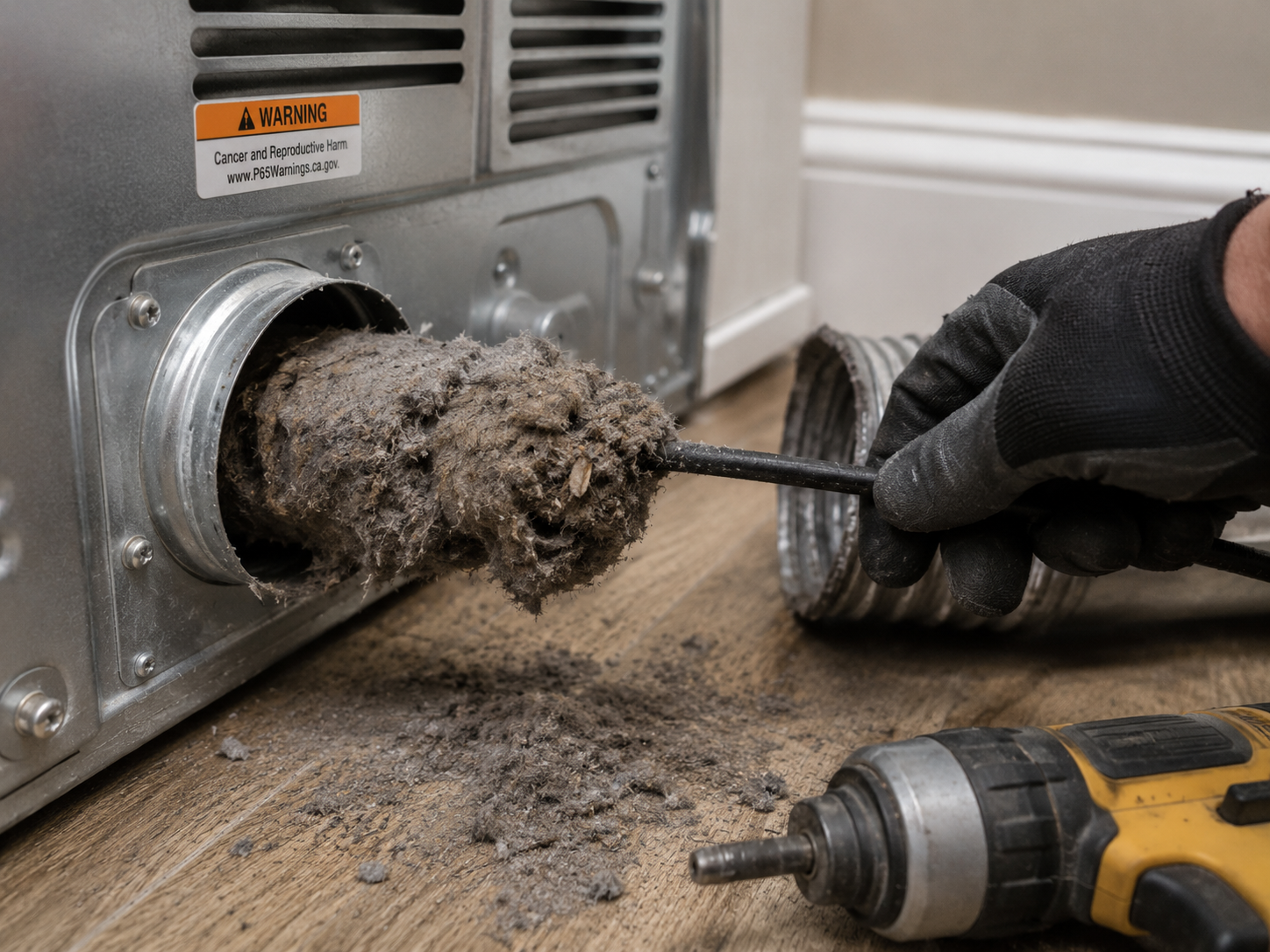
PREVENTION
Nest and Blockage Removal
Bird nests, rodent nesting material, and packed blockages at the termination get removed completely, and any screen somebody has added over the outlet gets taken off entirely rather than simply cleaned.
THE WORD ON OUR WORK
WHAT OUR CLIENTS SAY.
The reaction we get most is at the end, when people see what came out. Second most common is surprise at how much faster the dryer runs afterward, usually from someone who had assumed the appliance itself was simply getting old.
FAQ
FREQUENTLY ASKED QUESTIONS.
Dryer vent questions usually start after a load takes too long. Here is what homeowners ask most about frequency, warning signs, and what a proper cleaning involves.Dryer vent questions usually start after a load takes too long. Here is what homeowners ask most about frequency, warning signs, and what a proper cleaning involves.
How often should a dryer vent be cleaned?
Once a year suits most households. Larger families, long duct runs, pet owners, and anyone doing several loads a day should look at every 6 months, since buildup tracks volume rather than time.
What are the warning signs of a clogged dryer vent?
Loads needing more than one cycle, clothes hot to the touch at the end, a humid or overly warm laundry room, a burning smell, or an exterior vent hood that no longer pushes air.
Can a clogged dryer vent really cause a fire?
Yes. Lint is the leading item first ignited in residential dryer fires, and failure to clean is the leading contributing factor. Restricted airflow lets heat build in exactly the wrong place.
How long can a dryer duct run be?
Thirty five feet from the transition duct connection to the exterior outlet, reduced by elbow allowances. A single 90 degree elbow counts as roughly 5 feet against that total length. TTP Handymen LLC measures runs across Vancouver, WA.
Is flexible plastic or foil duct safe to use?
No. Those products crush, sag, trap lint in every ridge, and are not rated for the application. Listed metal transition duct in a single length no longer than 8 feet is the correct material.
Can I clean the vent myself with a kit?
You can reach the first few feet. What kits generally miss is the far end of the run, the elbows where lint packs hardest, and anything nesting at the exterior termination.
Why is there a screen on my outside vent?
Someone added it. Code specifically prohibits screens at a dryer duct termination because lint catches on them immediately and blocks the outlet. It needs to come off, not be cleaned. Frequent work for TTP Handymen LLC in Vancouver, WA.
How long does a dryer vent cleaning take?
Most straightforward runs take under an hour. Long runs, multiple elbows, roof terminations, or a duct needing repair or reconnection will extend that, and we tell you before anything starts.
HOW WE WORK
FROM LAUNDRY ROOM TO EXTERIOR HOOD, HERE IS HOW.
STEP 01
Assess the system
We locate the exterior termination, measure the run, count the elbows, and check the transition duct material before touching anything. That tells us whether this is a straightforward cleaning or a bigger conversation.
STEP 02
Pull and protect
The dryer gets moved out carefully, gas or electrical connections get checked, and the floor gets protected. Containment goes up so the lint ends up in the vacuum rather than across the laundry room.
STEP 03
Brush the full run
A rotating brush runs the entire duct while a vacuum captures the debris at the same time. Working the whole length is what separates a real cleaning from a shop vacuum held at the wall.
STEP 04
Clear the termination
The exterior hood comes apart completely so we can see inside. Nests, packed lint, and any added screen get removed, and the damper gets worked by hand until it opens and closes freely under airflow.
STEP 05
Repair what needs it
Crushed sections, separated joints, and non compliant transition duct all get replaced or resecured on the spot. Joints get taped rather than screwed, because every screw point inside a duct catches lint immediately.
STEP 06
Test and reconnect
The dryer goes back into place, gets run on a heat cycle, and airflow at the exterior hood gets confirmed by hand. You get told the measured run length and anything worth watching for.
Get Your Free Estimate
STOP RUNNING EVERY LOAD TWICE, FREE.
If drying takes two cycles, the duct is the first thing to look at, not the appliance. Get in touch through the contact page and we will assess the run and price the work with no obligation.
WHAT YOUR VENT SERVICE COVERS
✓ Full duct run brushed and vacuumed
✓ Exterior termination cleared and damper tested
✓ Transition duct material and condition checked
✓ Run length and elbow count measured against code
✓ Any nesting or blockage fully removed
✓ Airflow confirmed before we leave