

Christmas light installation
CHRISTMAS LIGHT INSTALLATION IN Vancouver, WA
Roofing manufacturers warn against nails, screws, and staples for holiday decorations because every penetration is a potential leak, and UL 588 caps end to end connections at 210 watts on 22 gauge wire. TTP Handymen handles Christmas light installation across Vancouver, WA, using clips matched to shingles, gutters, or siding, running every circuit on outdoor rated cord and GFCI protected power, and handling takedown and storage afterward. Free estimates on every job, licensed and insured to $1 million.
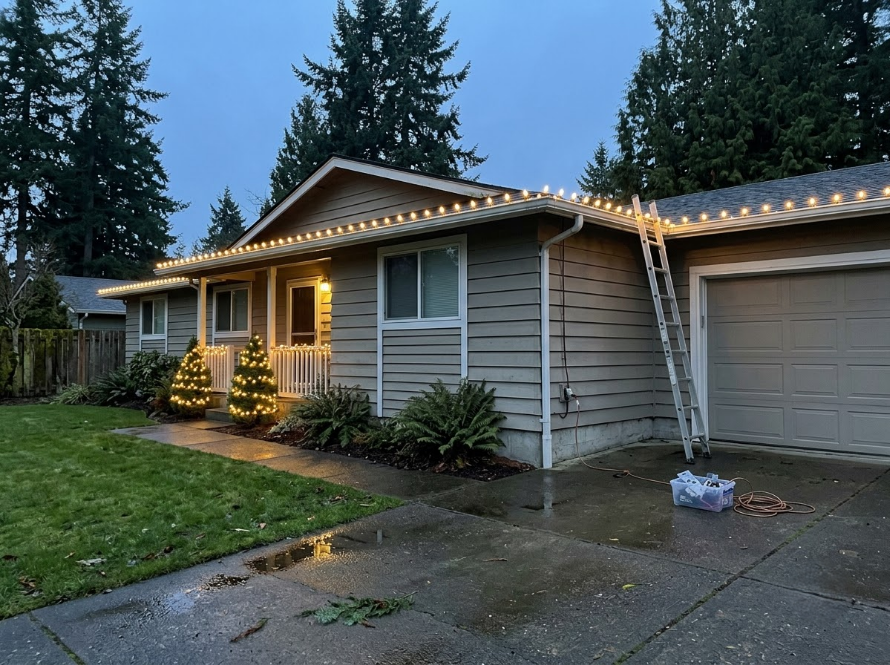
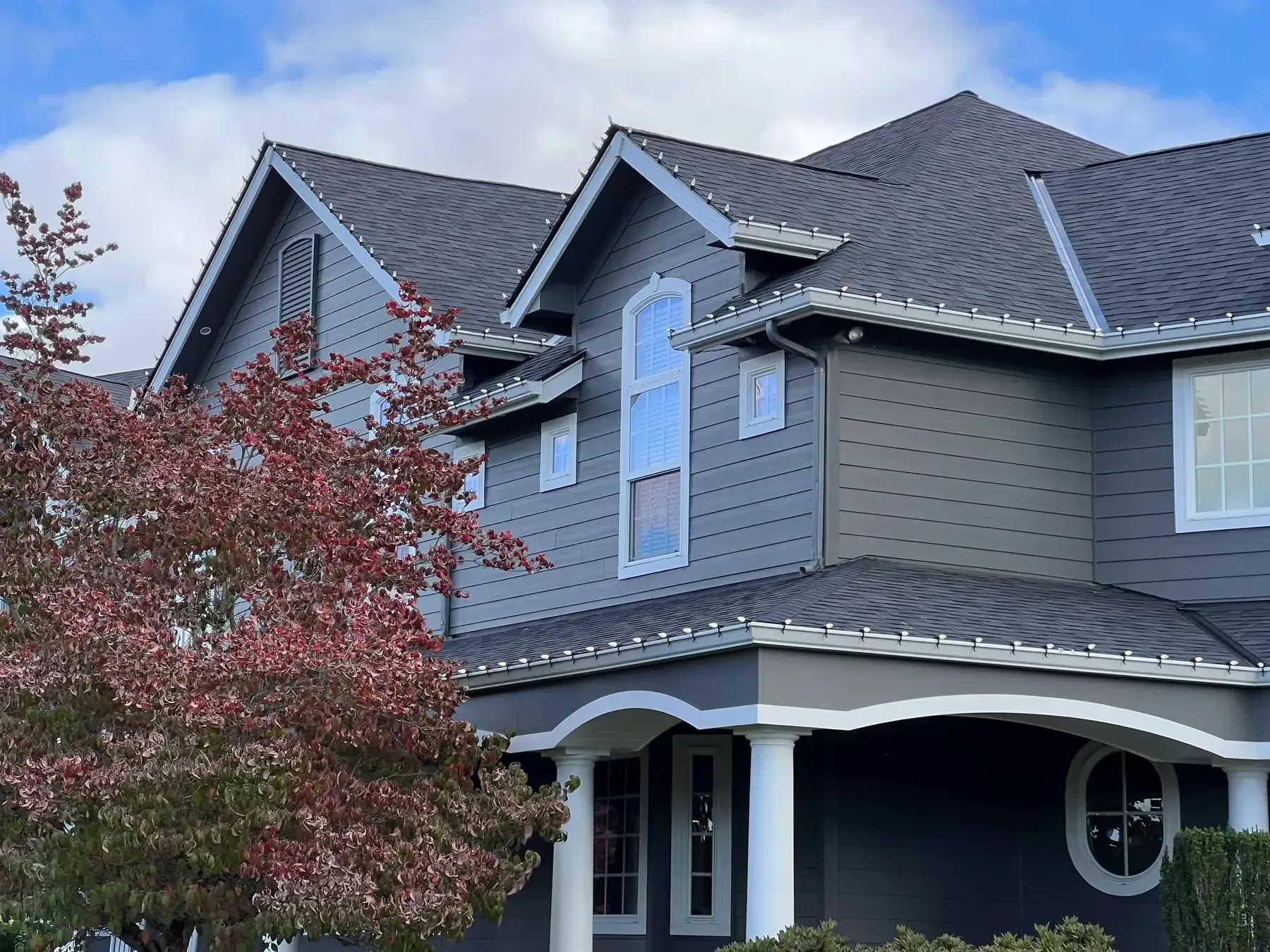
NOTHING GOES THROUGH YOUR ROOF. EVER.
A screw or a staple into a shingle in a climate that gets 41 inches of rain a year is not a decoration decision, it is a roofing decision. The manufacturers say so directly, and we have repaired the results. Every hole is a path for water here, and lighting is not worth one.
Every attachment we use is a clip designed for the surface it grips, and every one of them comes off at the end of the season leaving nothing behind. Nothing stays in the shingles over summer.
✓ No nails, screws, or staples anywhere on the building
✓ Clip type matched to shingle, gutter, or siding
✓ Outdoor rated cord on GFCI protected circuits
✓ Takedown and off season storage included
CHRISTMAS LIGHT INSTALLATION
NOVEMBER HERE IS DARK, WET, AND ON A LADDER.
That is the honest reason most people hand this over. Installing lights means working at height, in the rain, on a slick roof, in the dark by four in the afternoon, with cold hands and a strand that has three dead bulbs somewhere in the middle. Doing it in September or early October, before the weather closes in, is genuinely safer and considerably faster, which is why the schedule fills so early every year.
WET WEATHER MAKES THE ELECTRICAL SIDE MATTER MORE.
Outdoor receptacles at a dwelling require GFCI protection, and in a climate this consistently damp that requirement earns its keep. Indoor rated extension cords used outdoors and daisy chained connections are exactly the wrong combination in a Pacific Northwest November. We run outdoor rated cord throughout, keep connections up out of standing water, and respect the wattage limits on how many strings can safely connect end to end.
NOVEMBER RAIN HAS TESTED EVERY CLIP WE USE.
Anything that is going to let go does it in the first serious storm, usually the week after Thanksgiving. Over 4 years of holiday installs around Clark County we have settled on clip types and routing that stay put through the whole season rather than needing a callback in December. A display that is still fully lit and straight on New Year's Eve is the actual measure of whether it was installed properly.
WHAT A PROFESSIONAL INSTALL DELIVERS
NOBODY ON A LADDER
The single most common seasonal home injury involves a ladder in December. Handing this over removes that entirely, which for most people is the whole reason to call.
A ROOF LEFT UNDAMAGED
Clips rather than fasteners means no penetrations, no leaks, and nothing left in the shingles once the season is over and everything has come down.
LIGHTS THAT STAY LIT
Correct wattage loading, outdoor rated connections, and secure routing mean the display survives the storms rather than going dark halfway through December. We would rather split a circuit than risk a dark section.
A CLEAN, DELIBERATE LOOK
Even spacing, straight lines along the roofline, and consistent bulb orientation are what separate a professional display from a strand thrown over a gutter. Straight lines take longer and show immediately.
NOTHING TO STORE
Takedown and storage are part of the service, so nothing ends up tangled in a box in the garage waiting to be untangled again next November.
SAFE ELECTRICAL SETUP
GFCI protected circuits, outdoor rated cord, and connections kept clear of standing water are what keep an outdoor display safe through a very wet season.
WHAT WE LIGHT
OUR HOLIDAY LIGHTING WORK
Displays range from a clean roofline to a full property. These are the elements we install most often for homeowners around Vancouver and the surrounding Clark County communities. Most displays combine at least three of them.
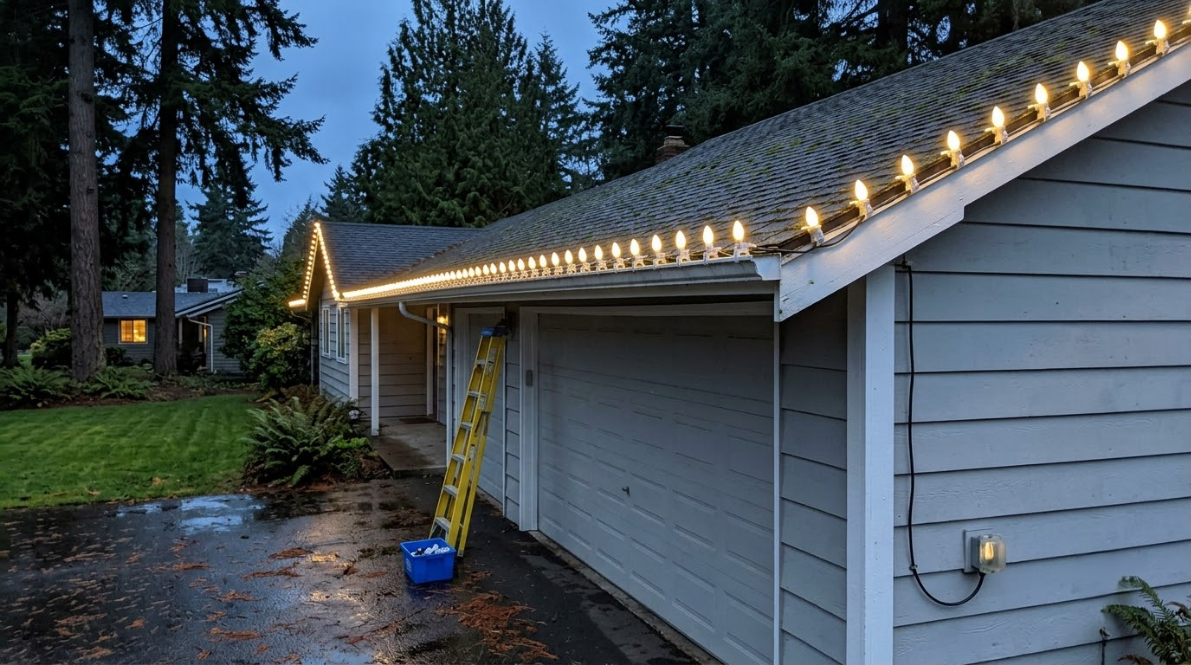
ROOFLINE
Roofline and Gutter Lighting
The defining line of any display. All in one clips grip either the shingle edge or the gutter lip, with consistent bulb spacing and orientation along the entire run. Clip choice depends on the roof edge.
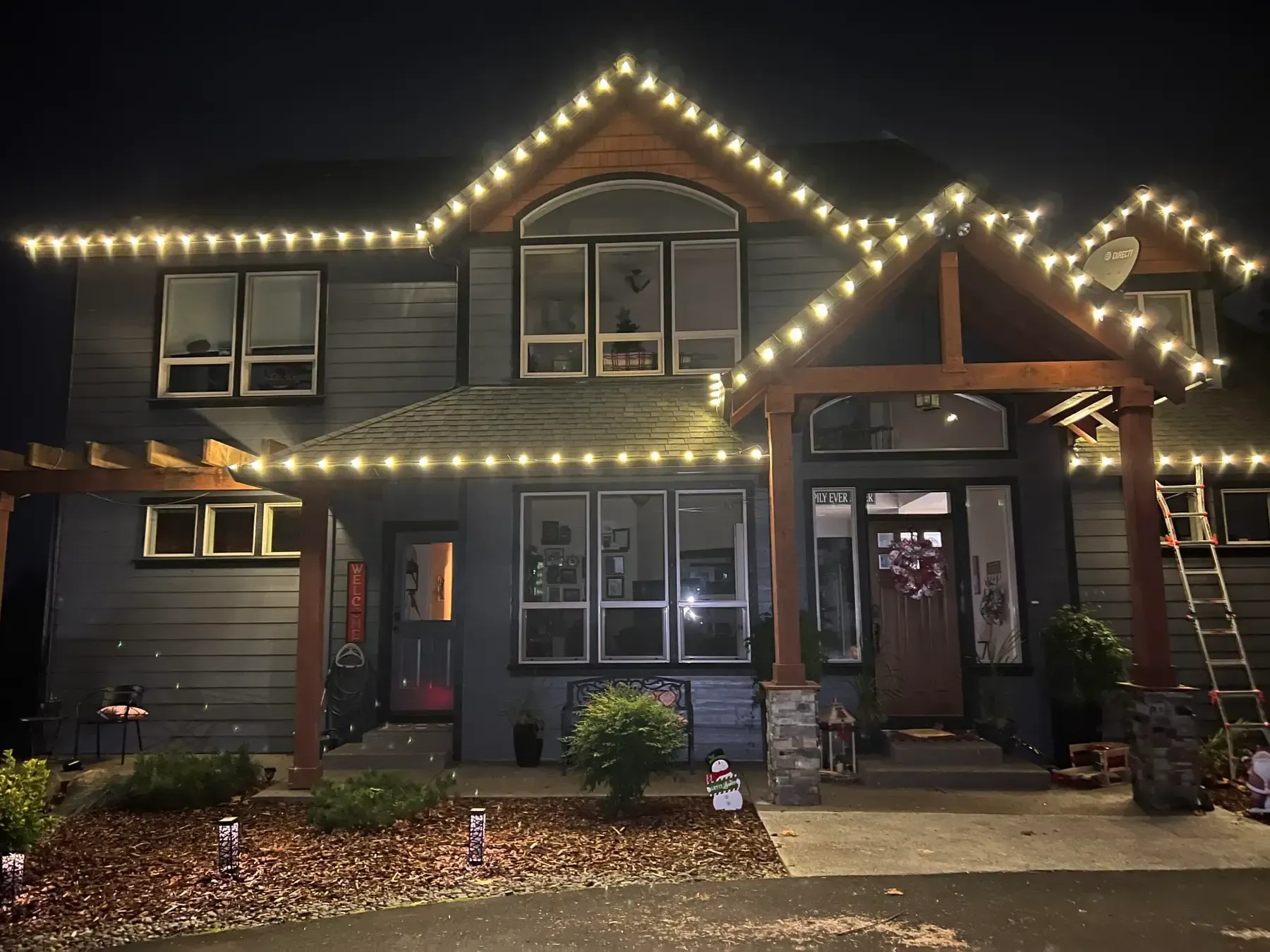
ARCHITECTURE
Window, Column, and Peak Accents
Window frames, porch columns, gables, and peaks get outlined to pick out the architecture, which does considerably more for a display than adding more roofline ever will. Picking out the architecture reads far better than simply adding length.
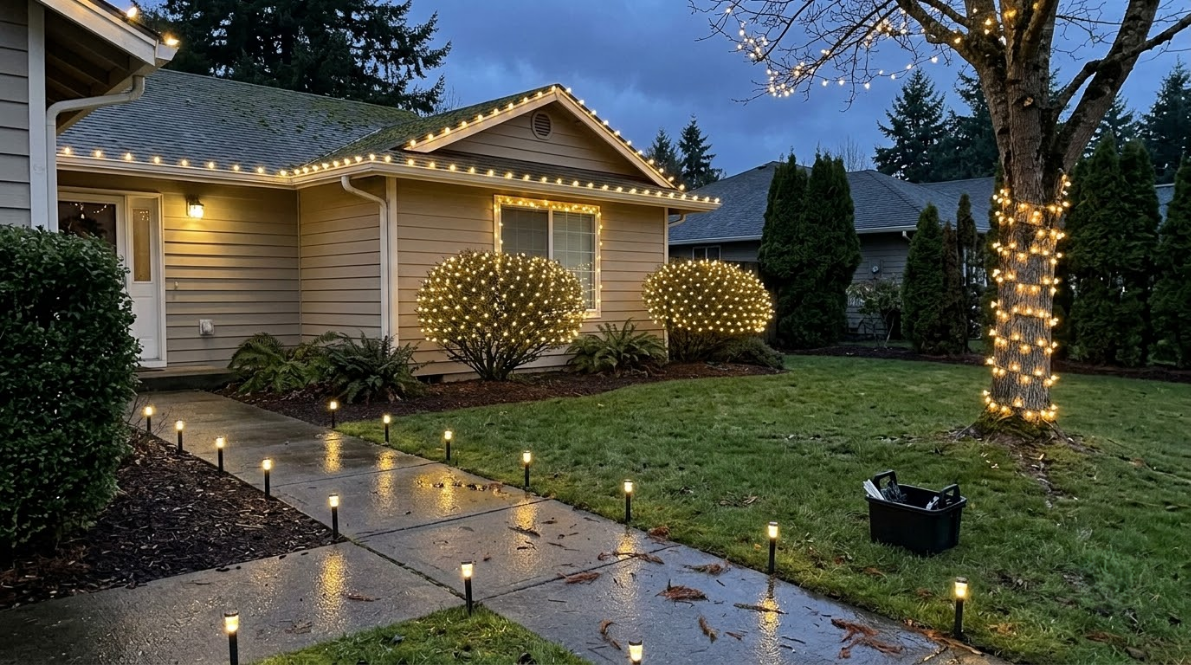
LANDSCAPE
Trees, Shrubs, and Walkways
Wrapped trunks, canopy lighting, shrub netting, and pathway stakes extend the display into the yard and give it depth rather than a single flat line. Landscape runs get buried or routed so nothing is left crossing a path.
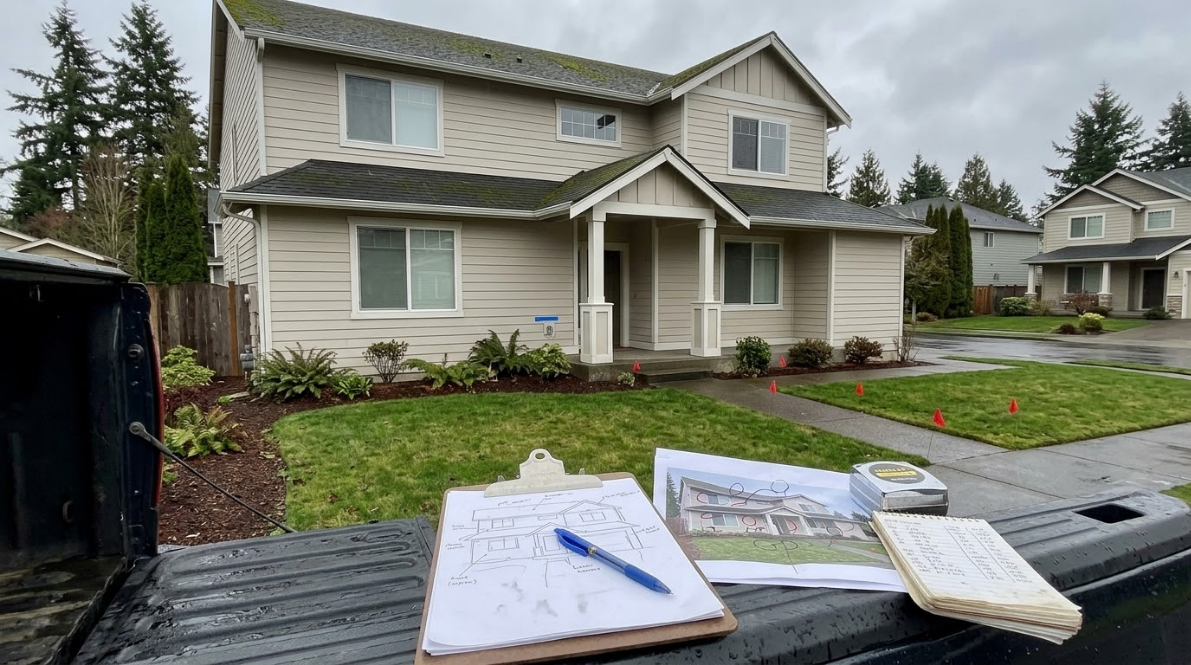
DESIGN
Layout and Design Planning
Before anything is ordered we walk the property and plan the display, including where power will come from and how circuits will be split across the load. You see and approve the plan before anything gets ordered or installed.
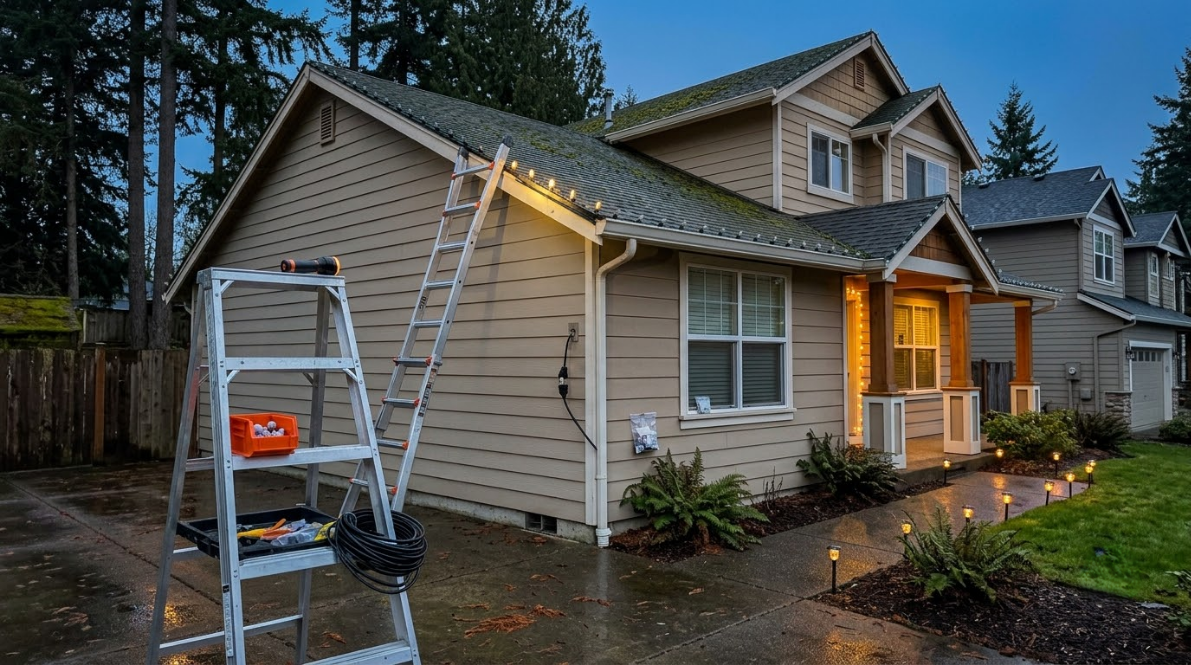
MAINTENANCE
In Season Service
If a section fails during the season we come back and fix it. Bulbs, connections, and clips all get checked so the display stays complete through the holidays. A dark section on Christmas Eve is not yours to fix.
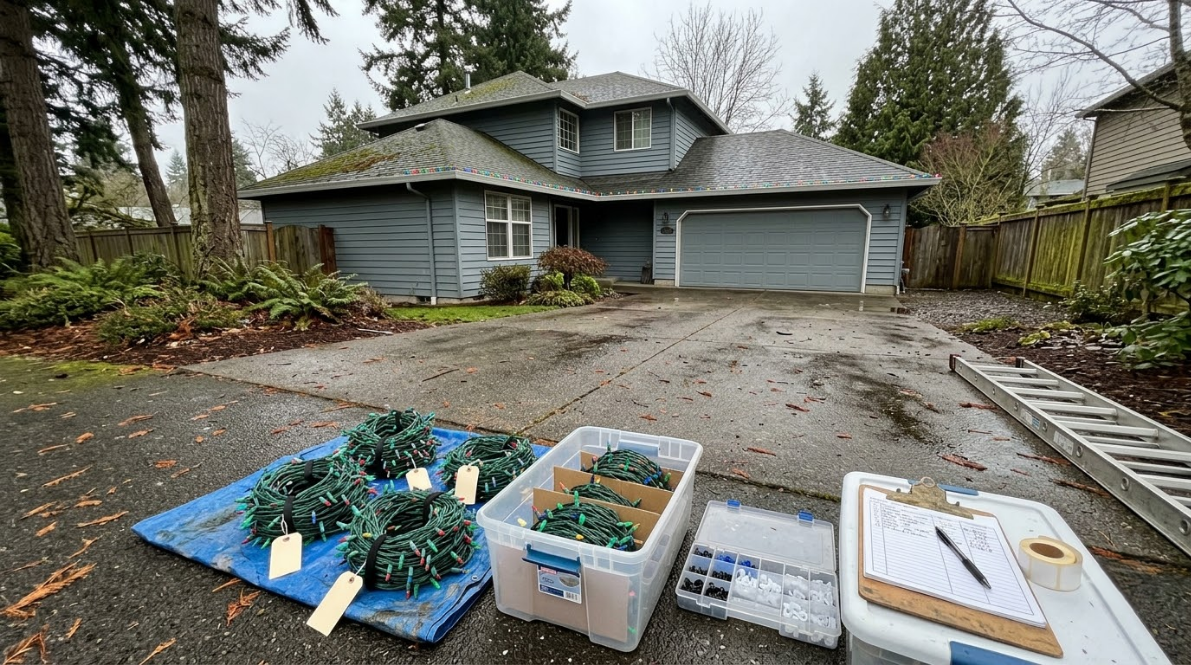
AFTER
Takedown and Storage
Everything comes down carefully in January, gets sorted, labeled, and stored properly, so next season starts with working strands rather than an untangling project. Everything gets labeled by run so next year goes up considerably faster.
THE WORD ON OUR WORK
WHAT OUR CLIENTS SAY.
The two things clients mention are never getting on a ladder in December, and the display still being fully lit and straight in January. The takedown gets appreciated more than the installation, which surprised us at first. January is when people are most glad they booked it.
FAQ
FREQUENTLY ASKED QUESTIONS.
Holiday lighting questions cover timing, safety, and what happens after the season. Here is what homeowners around Vancouver most often want settled before booking a display. Booking early is the single best thing you can do.
When should I book Christmas light installation?
Early. Most installers fill their schedule through the fall, and installing in September or October means working on a dry roof in daylight rather than in December rain. The calendar is generally full well before Thanksgiving.
How do you attach lights without damaging the roof?
With clips designed for the surface. All in one clips grip shingle edges or gutter lips, siding clips slide under the courses, and magnetic clips suit metal. Nothing gets nailed or stapled. Vancouver, WA homeowners ask TTP Handymen LLC constantly.
How long does an installation take?
A straightforward roofline often takes half a day. Full property displays involving trees, columns, and landscape lighting typically run a full day or occasionally more depending on scale. We give you a realistic window when we quote it.
Do you supply the lights or do I?
Either works. We can install lights you already own, or supply commercial grade product that stands up to this climate considerably better than most retail strands do. Commercial strands also survive multiple seasons rather than one.
What happens if a section stops working?
We come back and fix it during the season. That is part of the service, and it is one of the main practical reasons to have a display installed rather than doing it yourself.
How many light strings can be connected together?
It depends on wire gauge and wattage. Standards cap total connected load, which typically means only a handful of incandescent sets but considerably more LED sets in a single run. TTP Handymen LLC installs displays across Vancouver, WA.
Do outdoor lights need a GFCI outlet?
Yes. Outdoor receptacles at a home require GFCI protection under the electrical code, and in a climate this wet that protection is doing real work rather than sitting idle. Indoor rated extension cords never get used outside.
When do the lights come down?
Usually January, and we handle it. Everything gets removed, sorted, labeled, and stored so the following season starts with working strands rather than a box of tangled ones. You are not left with a January ladder job.
HOW WE WORK
FROM WALKAROUND TO JANUARY TAKEDOWN, HERE IS HOW.
STEP 01
Design the display
We walk the property, work out what the architecture actually wants, and plan the runs, the power sources, and how the load will be split across available circuits. Architecture usually suggests the display rather than the other way round.
STEP 02
Match clips to surfaces
Shingle, gutter, siding, metal, and glass each need a different clip. Getting that right is what keeps the display attached and the building free of any penetrations. Using the wrong clip is how displays end up on the lawn after a storm.
STEP 03
Test everything first
Strands, connections, and timers get tested on the ground before anything goes up. Finding a dead section at ground level is far better than finding it from a ladder. Dead bulbs and failed sections get replaced before installation starts.
STEP 04
Install with even spacing
Bulbs get set at consistent spacing and orientation, runs get pulled straight, and cord gets routed out of sight. Straight lines are most of what makes a display look professional. We sight the runs from the street before calling anything finished.
STEP 05
Power it safely
Circuits get split so nothing is overloaded, connections stay up clear of standing water, and everything runs on outdoor rated cord through GFCI protected receptacles. Wattage limits on end to end connections get respected rather than guessed at.
STEP 06
Service and take down
Anything that fails during the season gets fixed. In January everything comes down, gets sorted and labeled, and goes into storage ready for the following year. Nothing is left on the house once the season is over.
Get Your Free Estimate
BOOK THE LIGHTS BEFORE THE LADDER GETS SLICK, FREE.
Holiday schedules here fill up well before the first cold weekend arrives. Reach out through the contact page and we will walk the property, plan the display, and get you a date on the calendar.
WHAT YOUR LIGHTING QUOTE COVERS:
✓ On site design walkthrough before anything is ordered
✓ Clip type matched to every surface on the house
✓ No nails, screws, or staples used anywhere
✓ Circuits split and run on GFCI protected power
✓ In season service if anything stops working
✓ January takedown, sorting, and storage included